
"Hot, Dirty Fun!"

Yesterday I travelled over to Marks Tey to visit Diane and Russell's workshop and home.
Diane Levitt is my Crossing Crafts collaborator from the Suffolk Craft Society, and our project has taken both of us into unfamiliar territory.

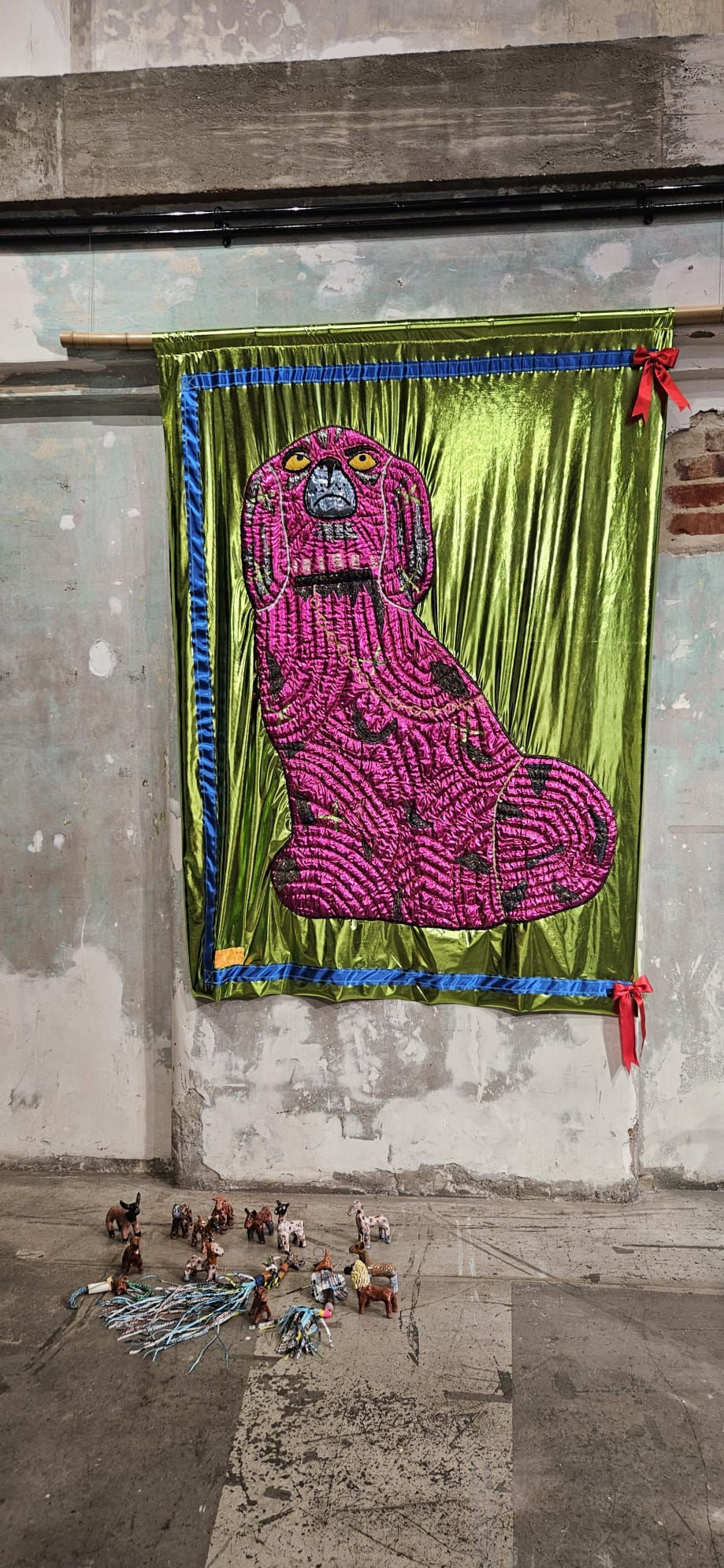
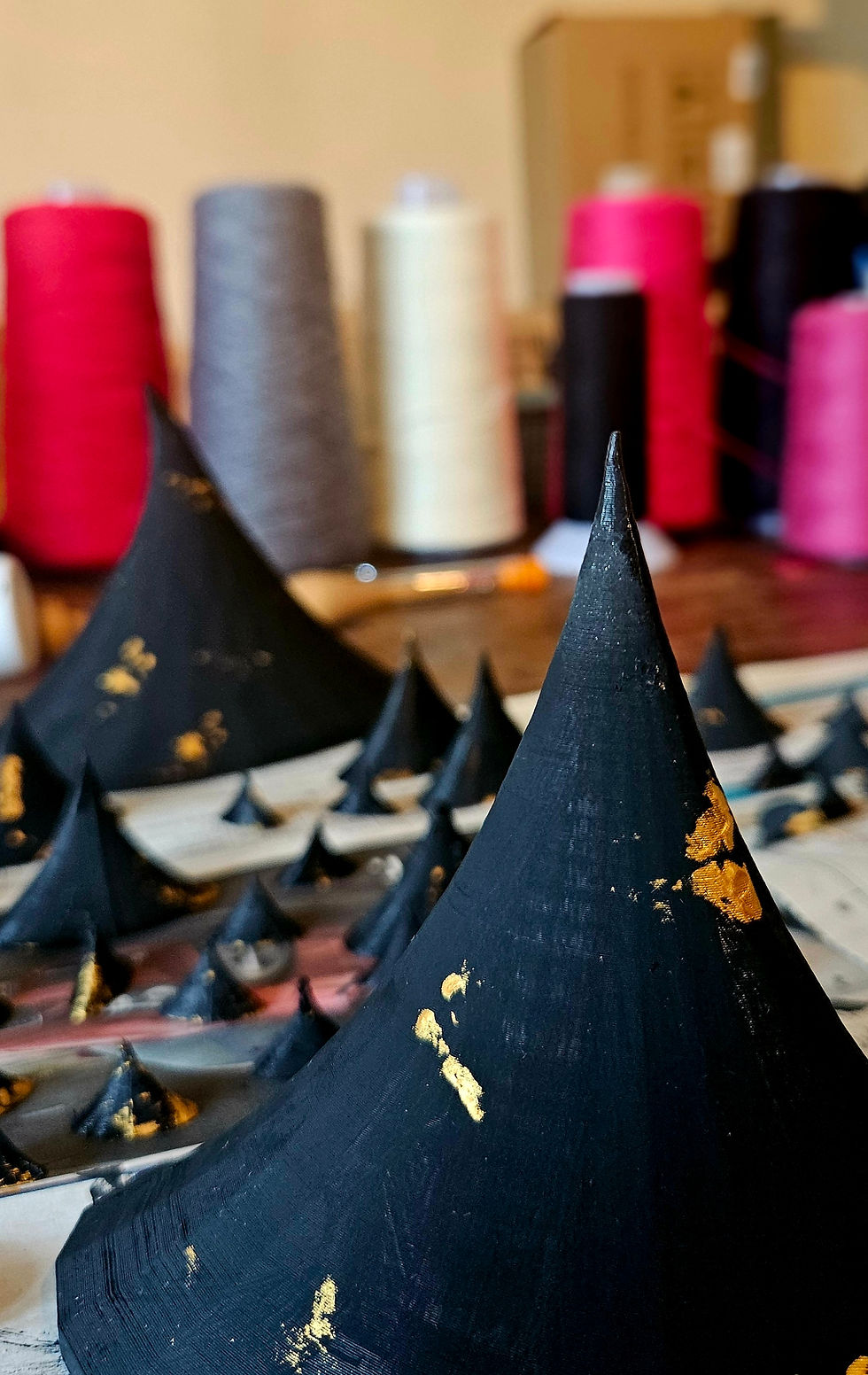
Diane is a high-end jeweller by trade, more accustomed to delicate silversmithing than welding large chains and casting oversized metal thorns. Yet for this project she has swapped precision jewellery tools for industrial processes to create dramatic thorn forms that will attach magnetically to chains and pierce the three tapestries that form part of our installation.
I was told to dress appropriately for a workshop, which meant my first opportunity to wear my red boiler suit. I bought it last year when I planned to buy a MIG welder after my metal sculpture course. The boiler suit arrived; the welder did not. I couldn't quite justify the expense. Yet. Still, I looked the part and by the end of the day it looked considerably less new!
Our first task was to review the metal stands Diane had been fabricating. The original plan was to powder-coat them copper to match the thorns. However, seeing them in person changed our minds. The blackened steel, with its gold traces left by the welding process, had a beauty of its own. Much like the untrimmed reverse of a tapestry, the marks of making felt important. Rather than hiding them, we decided to celebrate them with a clear protective varnish.

Next came the fun part.
We gathered scrap aluminium from around the yard and, using a rather satisfying chopping machine, cut it into smaller pieces ready for smelting. The furnace made the 31°C outside feel cool.
I was very happy to leave the smelting to the expert, Russell.
While he worked with molten metal, Diane and I prepared the oil-bonded casting sand used to create the moulds. Russell had previously fabricated a bespoke metal casting box in what felt like the time it takes most people to make a cup of tea.
One of the aims of the Crossing Crafts project is to encourage makers to think beyond their usual practice, and this is exactly where the collaboration has been most rewarding. During our conversations, I had become interested in introducing a three-dimensional element into a completed tapestry. Diane's knowledge of metal processes opened up possibilities I would never have explored on my own.
Together we created aluminium sticks for my project which, despite appearing solid, are surprisingly lightweight. Watching the molten aluminium flow into the moulds was mesmerising, catching the light as it reacted with the oil in the sand.

We also experimented with casting from Diane's 3D-printed thorn forms. While the results were promising, the process softened the sharp points of the thorn. Fortunately, another casting method they have available, using plaster moulds, should allow for much finer detail, as Diane uses this process for her delicate filigree work.
Like any good collaboration, the project has evolved as it has developed. Ideas have shifted, materials have changed, and solutions have emerged through conversation and making. What is great is Diane and I seem to be on the same wavelength.
We're now entering the final stages and are excited to see the installation come together.
The next milestone? Finding out whether it has been selected for the Suffolk Craft Society Summer Show at Ickworth Estate later this summer.

Comments